It’s not every day that you meet a young man who is already finding ways to turn his interests into practical skills. At just 17, Andres Soret is a high student with a passion for science, aerospace engineering, and a curiosity for emerging technologies. Recently, he has become a certified thermographer.
Introduction to Thermal Imaging
Andres was introduced to thermal imaging in his physics class. In this course he learnt about heat transfer processes, electrical energy production, and the technology transformations that are pivotal to modern industrial societies.
These concepts sparked his curiosity about blackbody radiation and its practical applications. Blackbody radiation describes the thermal electromagnetic radiation emitted by an idealised object. It absorbs all incident radiation, with the emitted spectrum determined by its temperature.
In a school paper, Andres went on to investigate how thermal cameras detect infrared radiation and use it to estimate surface temperatures.
“I wanted to understand how the physics we were learning in class could be used in real-world technology and found thermal imaging particularly interesting. Thermal cameras use infrared radiation to estimate surface temperatures, putting some of the principles of blackbody radiation into practice,” he said.
Advanced Thermography Training
A growing interest in thermal imaging led Andres to complete GTEK’s Level 1 Thermography Course. This advanced training is ideal for people who want to become certified in thermography, or need the qualification to work in their fields.
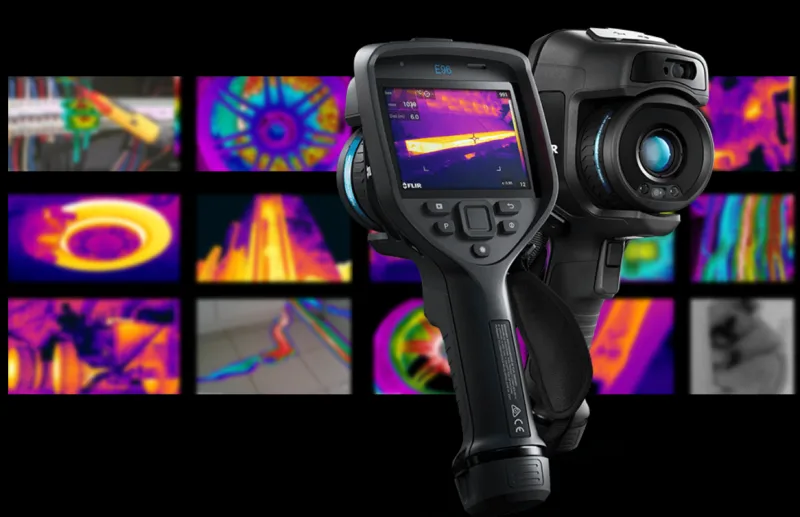
During his training Andres gained hands on experience using a FLIR e86 Advanced Thermal Imaging Camera. Andres learned how this camera is used for detecting mechanical faults, finding electrical hot spots, and surveying building and roof envelopes.
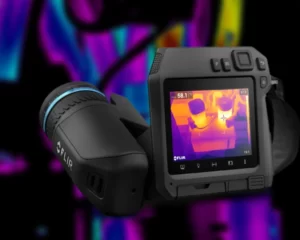
Andres also trained on the FLIR T840. This high performance camera is ideal for outdoor thermal inspections in bright and challenging light conditions. Andres was shown how to use the 180° rotating lens to identify failing components in hard-to-reach areas.
Certified Thermographer
Andres completed his training and passed the thermography exam with flying colours. He is now a certified Level 1 thermographer and can provide advanced thermal imaging services for local businesses.
Andres also has an advantage over other thermal imaging professionals. His advanced training allows him to apply for thermal imaging tenders offered by the Queensland and Northern Territory Governments, and by local councils. These lucrative tenders often require Level 1 certification.
Career Inspiration
You may wonder who inspired Andres to pursue a career in thermography. Andres was inspired by his dad, Dr Gerardo Soret.
“Dad got his PhD at the School of Civil Engineering of the University of Queensland. His research work focused on improving the thermal performance of buildings integrating other engineering areas into it such as fire safety and acoustics.”
This experience led Dr Gerardo Soret to set up Epora Engineering. He now specialises in thermal testing, design optimisation, and product innovation in the building environment.
Thermal Inertia
Andres has also been inspired by a research paper that his dad helped to write on thermal inertia. This paper shows how heat flow through the building envelope is restricted by other material properties that absorb and store heat.
Construction materials with high thermal inertia can improve the building energy efficiency in Australian locations where day and night temperature differ significantly.
“I love how thermal imaging can improve our built environment. In existing buildings, it can quickly identify thermal bridges, where heat transfers more easily through parts of the building envelope.
“What interests me is how different material properties can influence building performance, not just energy efficiency, but also acoustic insulation and fire safety,” he said.

Pilot Training
Andres has also gained qualifications in piloting drones through his school’s aviation and aerospace program. This program offers students opportunities to obtain drone pilot and radio control qualifications, as well as undertaking recreational aircraft pilot training.
So far, Andres has completed a remote pilot licence and an aeronautical radio operator certificate. he is now completing flight training towards his recreational pilot licence.
Drone Photography
With these new skills Andres has set up a drone photography and video business called Updraft Aerials.
“I was attracted by the idea of a career in aerial photography while getting my recreational pilot licence and taking photos from the cockpit. I then realised that I could take better quality images and videos using a drone. Now, with thermal imaging, I’m discovering even more possibilities.”
Andres’ vision is to save people time and money by detecting thermal bridging, equipment faults, and other issues in hard to reach places.
“I would love to use my drone, for example, to safely survey a roof issue and detect the fault before a technician completes the repairs. Drone thermal images can help the property owner to fully understand the problem and get the issue fixed more accurately. That’s the kind of service that I want to offer.”
Thermal Imaging Drone
Andres’ next goal is to custom build a thermal imaging drone. This drone project will allow Andres to combine his interests in aerospace engineering, electronics, photography and thermal imaging while developing practical engineering and problem-solving skills.
Andres is exploring the use of 3D-printed carbon-fibre-reinforced nylon components, a stabilised camera mount and an infrared camera module.
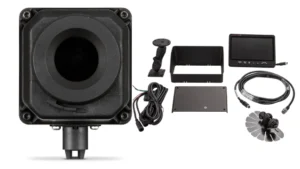
He also has an eye on the FLIR’s thermal cameras and drone gimbals. These solutions offer a 4K camera and a radiometric thermal sensor. They can also include a weather-resistant dual sensor for flying in rain, smoke, and fog.
Future Goals
In the future Andres wants to expand his drone photography to other sectors such as the mining industry.
“Drones can fly over large areas quickly and effectively. They can safely reach areas where it’s dangerous for people to go. And the thermal camera can, for example, detect overheated machinery before this equipment breaks down. There are so many possibilities with thermal technology.”

Thermal Camera Training
If you are inspired by Andres’ story and would like a career in thermal imaging, getting formal training is a good start.
GTEK Infrared’s thermography training options start from half day thermography courses, up to Level 1 and Level 2 ITC thermography training. You will learn infrared fundamentals, basic thermal physics, camera functionality, and operation.
If you would like more information or want to see our extensive FLIR camera range, please GTEK on 1300 416 626.